1. River Exploration: Day Excursions vs. Multi-Day Lock Cruises
Exploring the river from the water offers an intimate view of the steep schist slopes that cannot be seen from modern highway tunnels. Travelers generally choose between two primary nautical modalities:
Modal Analysis: Day Excursion Boats vs. Multi-Day Hotel Ships
| Modality Profile | Typical Operational Span | Pros & Strategic Strengths | Cons & Logistical Limitations |
|---|---|---|---|
| Day Passenger Boats (e.g. Porto–Régua) | 6 to 10 hours (one way boat, return by train or coach) | Affordable single-day commitment; passes through Crestuma-Lever and Carrapatelo locks | Long transit hours; crowded observation decks; fixed schedules leaving little time in towns |
| Small Electric / Traditional Rabelo Charters | 1 to 2 hours (round trip from Pinhão or Tua) | Intimate scale; silent propulsion available; access to narrow tributary inlets | Restricted geographic range; does not pass through major hydroelectric locks |
| Multi-Day Hotel Cruise Vessels | 5 to 8 days (Porto to Barca d'Alva and return) | Full valley traversal; all meals and accommodation included; handles all 5 locks | High financial cost; restricted evening mobility ashore due to remote river moorings |
2. The Linha do Douro: Europe’s Premier Riverside Railway
Engineered during the late nineteenth century, the Linha do Douro railway ranks among the most spectacular rail journeys in the world. Departing from Porto's tile-adorned São Bento Station, the track initially winds through green Minho valleys before descending to kiss the riverbank at Mosteirô.
For the remaining eighty kilometres eastward through Peso da Régua, Pinhão, Tua, and Pocinho, the railway runs alongside the water's edge, offering passengers unobstructed views of the terraced valley. Historic steam train services operate seasonally between Régua and Tua, hauled by vintage coal-fired locomotives.
3. Historic Towns and Settlements: Where to Moor and Explore
The urban settlements lining the Douro each fulfil distinct roles within the valley’s viticultural economy:
- Porto & Vila Nova de Gaia: The grand estuary twin-cities where coastal Atlantic air meets centuries of trade. Essential for examining the historic riverside Ribeira district, Eiffel-inspired bridges, and centuries-old wine lodges.
- Peso da Régua: The administrative capital of the demarcated region. Home to the comprehensive Museu do Douro, housed in the former headquarters of the Pombaline wine company, offering archival collections on river navigation and cartography.
- Lamego: Located just south of Régua up a scenic tributary valley, this baroque episcopal city is famous for its monumental Sanctuary of Nossa Senhora dos Remédios, flanked by a 686-step zigzagging granite staircase.
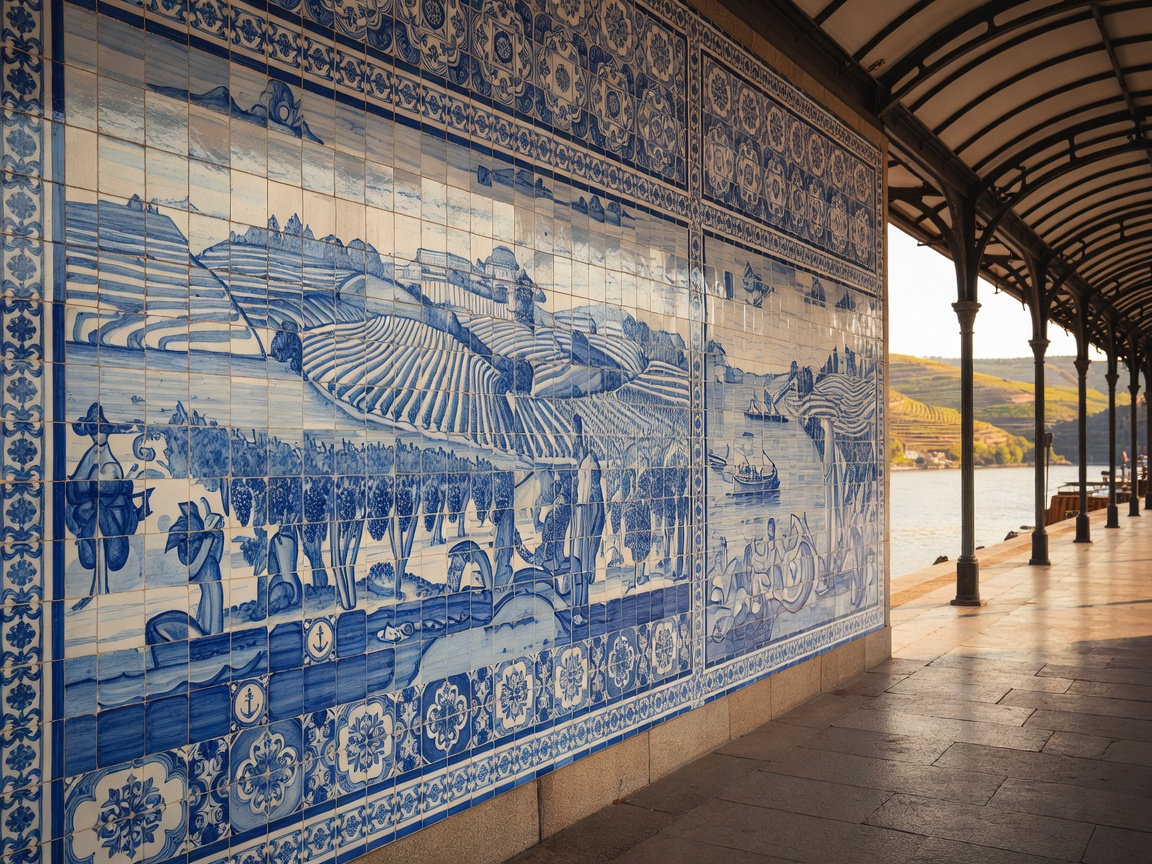
- Pinhão: Nestled at the confluence of the Douro and Pinhão rivers, this picturesque town represents the beating heart of the Cima Corgo. Its 1937 railway station is lined with 24 blue-and-white azulejo tile panels detailing the vintage life.
- Barca d'Alva: The peaceful eastern terminus of the Portuguese navigable waterway, situated right at the Spanish frontier within the rugged natural park boundary.
4. Panoramic Overlooks (Miradouros) Accessible by Road
For travelers exploring by automobile along the winding N-222 highway—often cited among the world’s most scenic driving roads—stopping at elevated miradouros is essential for observing valley scale:
- Miradouro de São Salvador do Mundo: Overlooking the former Cachão da Valeira canyon, surrounded by ancient pilgrim shrines, offering dramatic views of the narrowest throat of the river.
- Miradouro de Casal de Loivos: Poised directly above Pinhão, providing a classic viewpoint capturing the sweeping S-bend of the river and the terraced amphitheatre of Quinta do Bomfim.
- Miradouro de São Leonardo da Galafura: Perched at an altitude of 640 metres, giving an expansive vista stretching across both banks of the Douro toward the distant Marão peaks.
5. Practical Travel Timing & Seasonal Recommendations
The valley experiences severe seasonal contrasts. Spring (April to late May) brings temperate conditions, blossoming almond and olive groves, and active bird migrations in the international canyons. Autumn (mid-September to late October) is the quintessential harvest season, when the hillside grape foliage turns brilliant shades of copper, amber, and deep wine, while the pungent aroma of fermenting must fills the riverside villages.
Mid-summer (July and August) should be approached with care: temperatures in the enclosed schist valley regularly exceed 40°C, making midday walking tours physically demanding.